
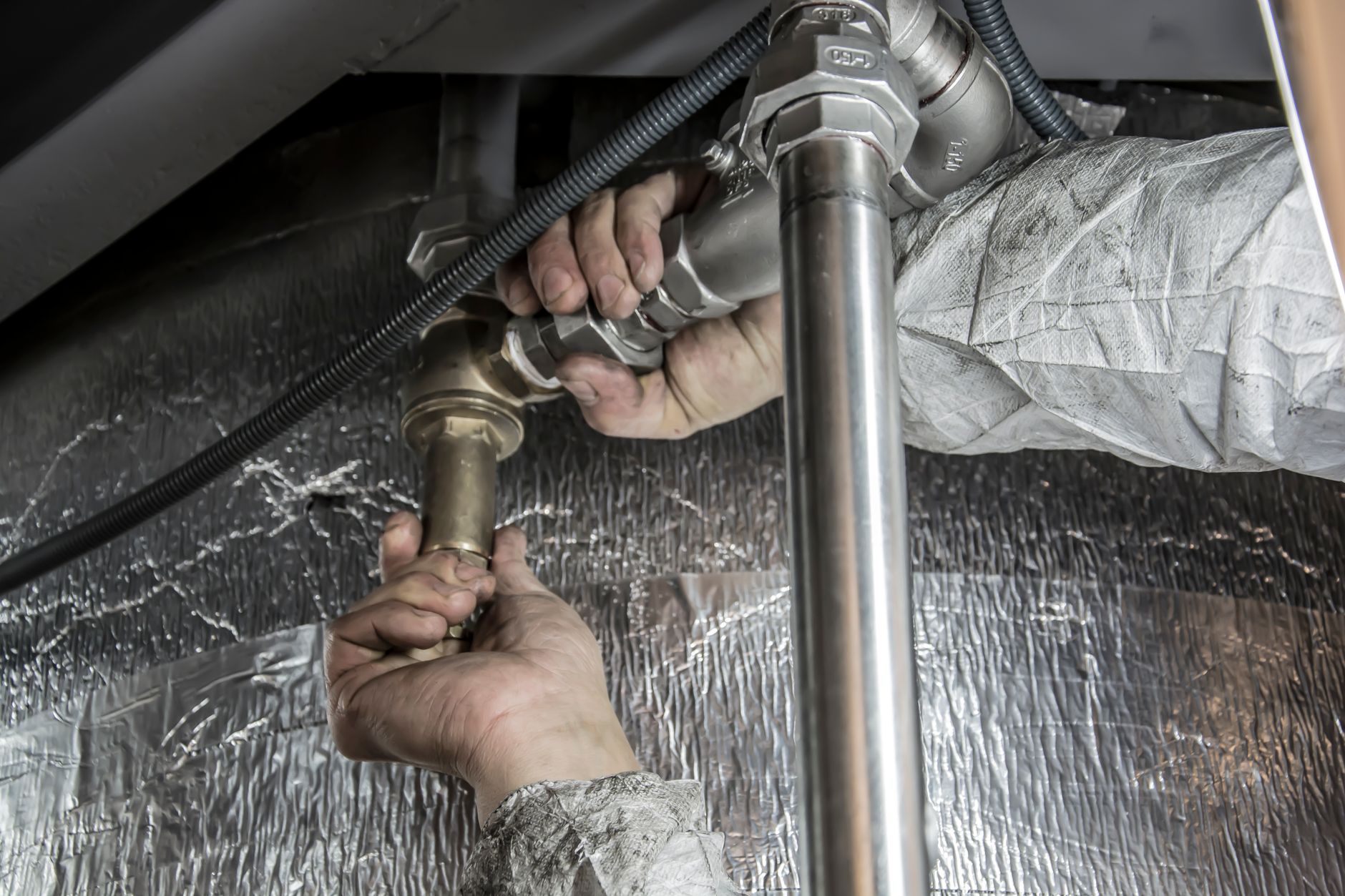
Annual boiler maintenance concerns almost every home heated with gas, oil or wood in France, since the law treats it as a requirement rather than a simple recommendation. Beyond the regulatory side, this yearly appointment has a direct effect on household safety, the appliance’s performance and the size of the heating bill. The remaining question is what this requirement actually covers, how much it costs, and whether the landlord or the tenant is the one who has to pay for it. Here are the rules to know, how the inspection actually unfolds, and the prices charged in 2026.
Why annual boiler maintenance is a legal requirement
The obligation to service a boiler every year has existed in France for several years and rests on a precise regulatory framework. It requires whoever occupies the home to bring in a qualified professional each year for a full inspection of the heating appliance.
This rule serves three purposes: reducing the risk of breakdown, protecting occupants’ safety against the risk of carbon monoxide poisoning, and maintaining the energy performance of the system. A poorly adjusted boiler uses more energy for the same level of comfort, which shows up directly on the yearly bill.
Which boilers and appliances are covered by this requirement
The requirement applies to boilers with a rated output between 4 and 400 kW, whatever the fuel used: gas, oil, wood or multi-fuel systems. Heat pumps and heating appliances with ventilation also fall within the scope of this maintenance requirement, even though the pace differs: a heat pump is generally serviced every two years rather than annually. The rules and prices specific to heat pumps are covered in the guide to finding a professional to service a heat pump.
Sweeping the flue remains a separate but related requirement: it is required at least once a year for boilers connected to a flue, since a blocked duct also raises the risk of carbon monoxide poisoning.
How annual boiler maintenance actually unfolds
During the visit, the professional carries out a standardised series of checks regardless of the type of appliance. They clean the boiler’s components, make the adjustments needed for it to run properly, then measure the carbon monoxide level on non-sealed boilers. Above a certain threshold, they must inform the occupant and, in case of immediate danger, shut the appliance down until normal operating conditions are restored.
The technician also estimates the system’s energy performance and pollutant emissions, comparing them against the results of the most recent appliances on the market. This comparison makes it possible to spot an outdated appliance before a breakdown happens in the middle of the cold season.
At the end of the visit, the professional issues a maintenance certificate within fifteen days. This document lists the work carried out, the carbon monoxide level measured and usage advice: it should be kept for at least two years, since an insurer or landlord may ask for it after a claim.
Flue sweeping, a separate but related requirement
For gas and oil boilers connected to a flue, sweeping is required at least once a year, in addition to servicing the appliance itself. For wood heating, this can rise to twice a year above a certain volume of fuel burned, with one sweep falling during the heating season. These two interventions, boiler servicing and flue sweeping, answer separate requirements and do not replace one another.
Scheduling these appointments on a fixed date, alongside the other tasks that make up organising daily home life, avoids missing a year and makes it easier to book ahead of the autumn rush.
Who has to arrange maintenance, the landlord or the tenant
The rule is simple on paper: boiler maintenance is the responsibility of whoever occupies the home, whether owner or tenant. A homeowner living in their own property pays for this expense directly. A tenant, for their part, must cover the maintenance cost since they benefit from the system day to day, unless the lease explicitly states that the landlord takes care of it.
This principle carries an important nuance: in the event of significant damage or natural wear linked to normal use, replacing the boiler remains the landlord’s responsibility, even when routine maintenance falls to the tenant. For a shared boiler serving several homes, maintenance costs fall instead to the property owner or the building’s management body.
After replacing a boiler or installing a new one, the first service must take place no later than the end of the calendar year following the work, paid for by whoever occupies the home at that point.
What does annual boiler maintenance cost
The cost of servicing a boiler varies considerably depending on the package chosen, the type of appliance and the region. A simple annual visit, which covers neither parts nor repairs, generally falls between 100 and 200 euros. A more complete service contract, including travel, labour and sometimes replacement parts in case of breakdown, tends to run between 150 and 300 euros a year depending on the level of service chosen.
| Package | What is included | Indicative price range |
|---|---|---|
| One-off visit (no contract) | Annual inspection only, parts and repairs charged separately | 100 to 200 euros |
| Basic service contract | Annual visit, scheduling, travel | 120 to 200 euros a year |
| Full service contract | Visit, travel, labour and replacement parts included | 200 to 300 euros a year |
One-off visit or service contract, what changes the price
The highest cost generally applies to oil-fired boilers, whose cleaning and inspection take longer than a gas condensing boiler. Signing up to an annual contract rather than paying for a one-off visit each year often limits the total amount spent in case of a breakdown, since labour and sometimes parts are already included in the contract’s fixed bill.
What are the risks of skipping annual maintenance
A boiler that is never serviced loses performance season after season: it uses more energy for the same level of comfort, which shows up directly on the heating bill. The risk of breakdown also rises, most often right when the appliance is working hardest, in the middle of winter.
The main risk, however, is a health one: poorly adjusted combustion or a blocked flue can lead to carbon monoxide poisoning, a colourless and odourless gas that is particularly dangerous. This is exactly why the professional systematically measures the carbon monoxide level during the visit.
Not having a maintenance certificate can also cause problems after a claim: a home insurer is entitled to limit or refuse compensation if no proof of regular servicing can be produced. When a boiler has reached an advanced age and keeps showing signs of weakness despite regular servicing, replacing it with a more efficient appliance eventually becomes the more sensible option; in that case, checking the RGE certification of the firm contacted determines access to the financial aid available for this kind of work.
Choosing a boiler service contract
Before signing a service contract, it is worth comparing several offers and checking exactly what each one covers: some packages are limited to the annual visit, while others add repairs, replacement parts or a guaranteed response time in case of breakdown. The detail of what is covered matters more than the headline price, since two contracts at a similar price can cover very different situations in an emergency.
It is also worth checking the boiler’s remaining lifespan before signing a multi-year contract, to avoid committing for several years when a replacement is already looming. In case of a breakdown outside the scope of a service contract, finding a heating engineer for an emergency repair quickly limits the time spent without heating, especially during cold weather.
Asking for a written quote detailing the package, the services included and the response time remains the best way to compare several professionals before committing to an annual service contract. For a home in Paris, the comparison of boiler servicing providers in Paris sets one-off visits and contracts side by side, with their 2026 prices.